



























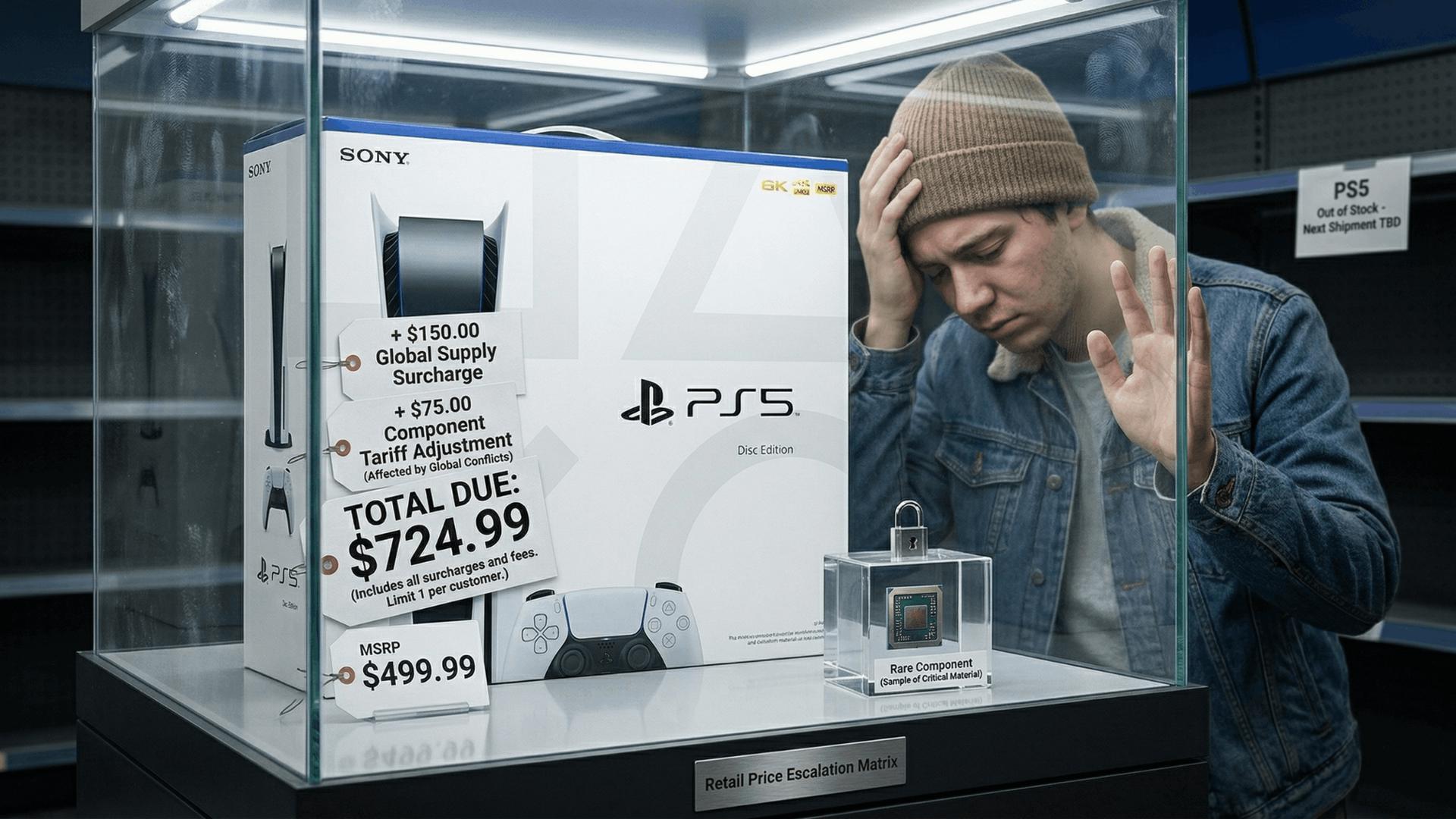
RAM prices surged from late 2025 because AI companies are hoarding memory chips. That is the real reason your PS5 just got more expensive. Prices have barely started to tick down, analysts think the crisis lasts into 2027, and Microsoft and Nintendo could raise prices too. Right now, waiting is a reasonable strategy, but there is no guarantee things improve soon.
If you looked at the PS5 price hike announced last week and thought "why now?", the answer is RAM.
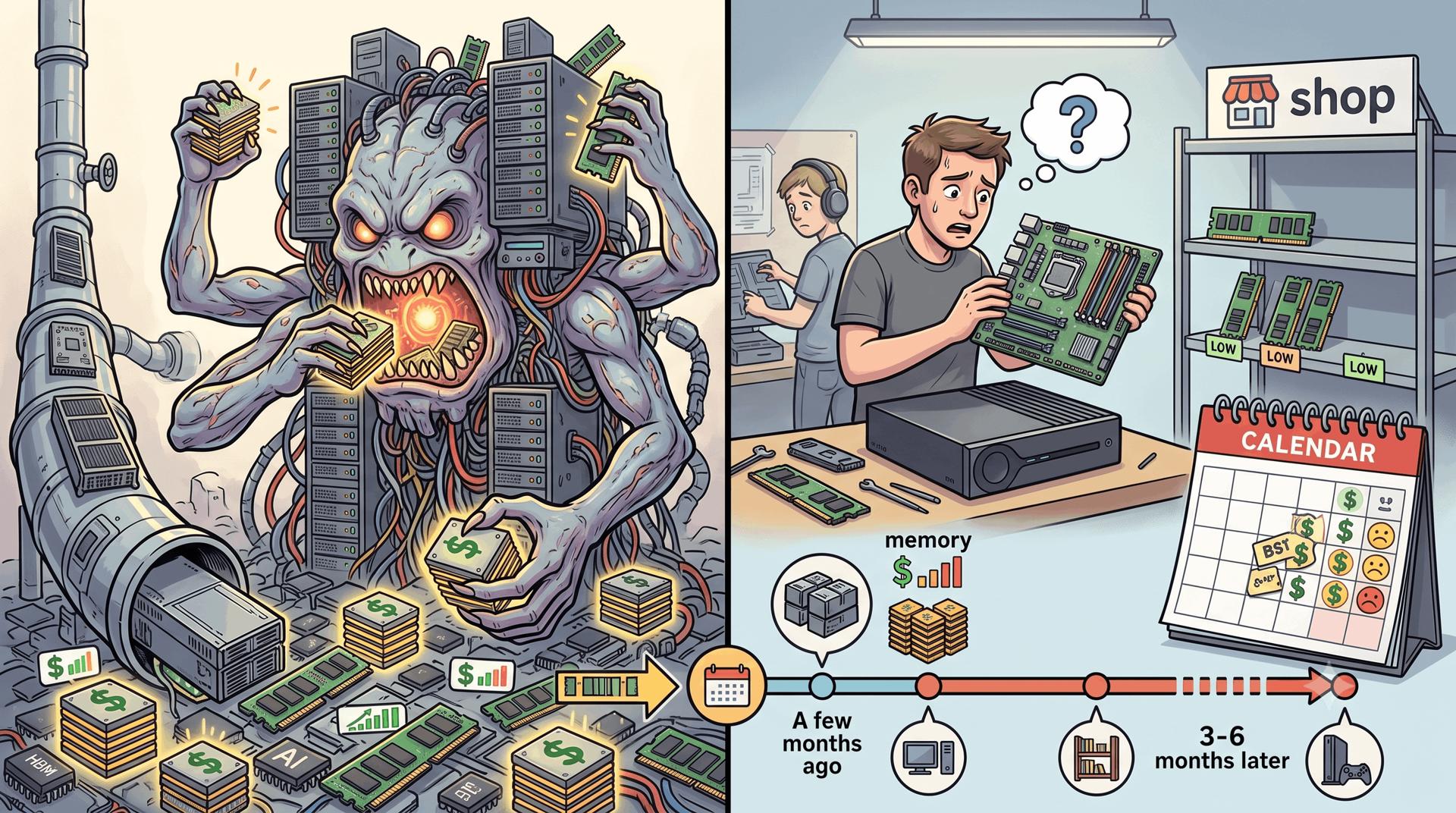
Since around November 2025, memory prices have been climbing steadily. The cause is not mysterious: AI companies like the big hyperscalers are consuming enormous quantities of DRAM and NAND flash, outcompeting consumer electronics manufacturers for the same chips. Less supply for gaming hardware means higher costs, and those costs have now landed on your shelf price.
The numbers
A 32GB DDR5 6000MHz kit that cost a normal amount at the end of 2024 peaked at around $449 in late February 2026. As of late March, that same kit is sitting at $419. That $30 dip is the first real sign of easing. It is not relief. It is a data point.
Sony's PS5 price rises take effect on April 2nd. The base PS5 goes up by £90 in the UK and $100 in the US. Analysts from Ampere Analysis told Eurogamer this week that Sony had likely run out of component price protections, forcing the move to protect its hardware margins.
It is not just Sony
Piers Harding-Rolls at Ampere Analysis put it plainly: "It wouldn't be a surprise if Microsoft and Nintendo followed suit in the not-too-distant future." The same supply chain pressure hitting Sony hits everyone who builds hardware with RAM and storage inside it.
Valve already delayed the Steam Machine earlier this year because of RAM and storage price surges. The hardware was originally expected in Q1 2026 and is still waiting for a concrete launch date.
Why prices are just now starting to ease
Two things shifted the market in the last few weeks. Google published research on an algorithm called TurboQuant, which the company claims reduces memory requirements for AI inference by up to six times. If that pans out at scale, AI companies need far less RAM per workload. Meanwhile, OpenAI ran into fundraising difficulties, which reportedly slowed infrastructure spending and took some pressure off chip demand.
Neither of these is a permanent fix. Analysts at Moor Insights and Strategy said the crisis is likely to last into or through 2027. The small price drop is encouraging, but it is too early to call it a trend.
What this means for you
If you are shopping for a gaming PC right now, RAM prices are still significantly elevated. The smart move is to buy only what you actually need rather than upgrading speculatively. A good deal today might still be overpriced compared to 12 to 18 months from now.
If you are considering a PS5, the price goes up on April 2nd. That window has basically closed. On the other hand, if you were already on the fence about whether the PS5 is worth it at all, the hike is one more reason to wait and see whether prices normalize, or whether a deal appears on an existing stock unit.
As for Xbox and Nintendo, there is no announcement yet. But with GTA 6 expected in November, both companies face a difficult choice. Raise prices and risk losing sales momentum going into the biggest game launch in years, or absorb margin pressure and hold. The next few months will tell.
The broader picture
This is a moment where the price comparison angle actually matters. When hardware prices are in flux, knowing the current best price for what you already own or what is still in stock at the old price has real money value. Keep an eye on deals from retailers moving old PS5 stock. They are more motivated than usual to clear inventory before the April 2nd cliff edge.
Sources: IGN, Eurogamer / Ampere Analysis




Comments
Join the discussion soon
Comments are coming. Be one of the first to share your take.