



























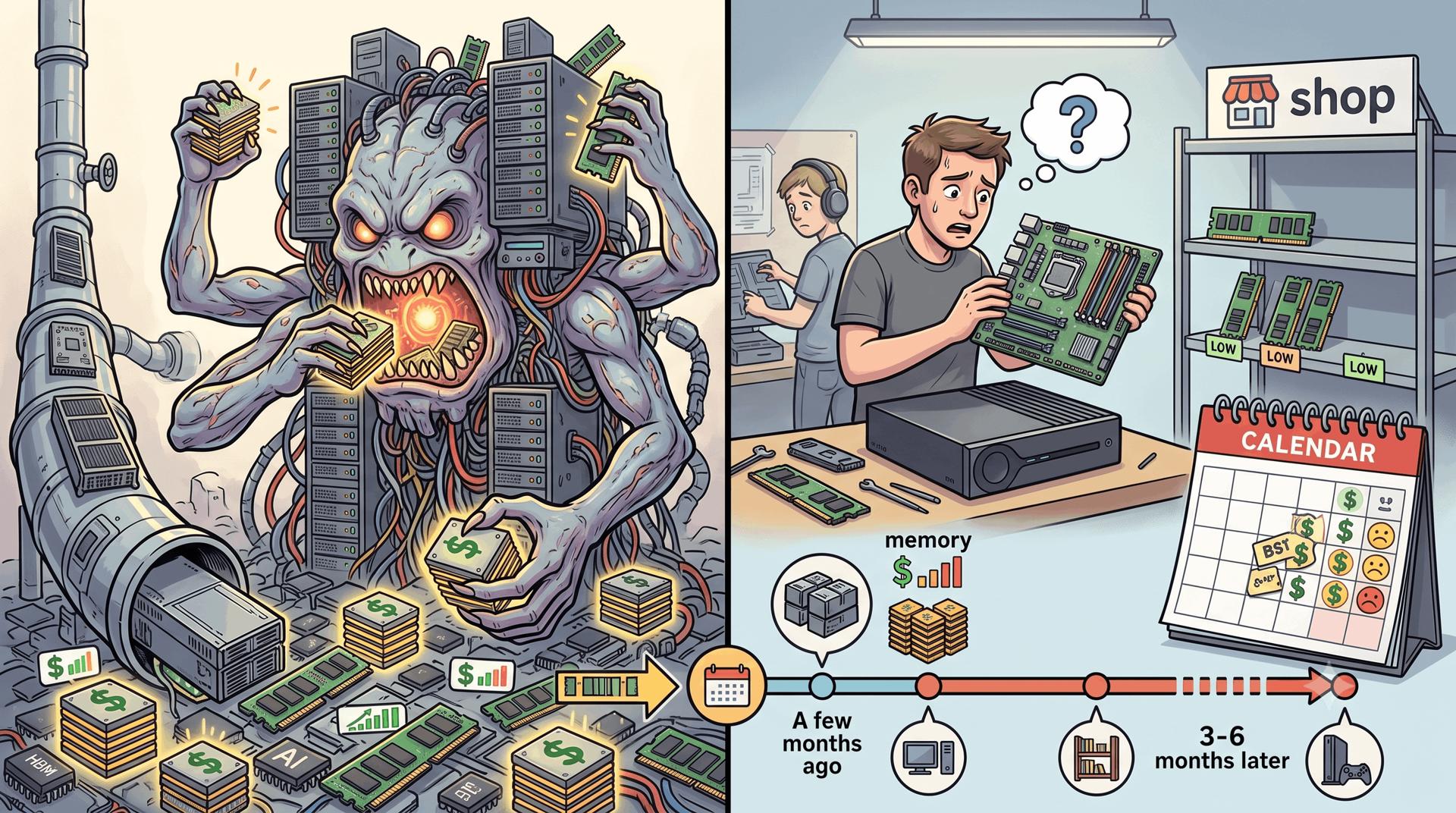
Valve engineers working on the new Steam Machine have confirmed the global memory (RAM) shortage is worsening, driven by AI demand. They warn that the high prices gamers see on shelves today are lagging behind bulk costs by 3-6 months, meaning further price hikes are on the way for PC components and future consoles.
If you've been waiting for PC hardware prices to come back down to earth, you might want to sit down. Engineers at Valve, fresh off the launch of the pricey new Steam Machine, have delivered some sobering news: the memory crisis that has inflated the cost of components isn't getting better. It's actively getting worse.
In a recent interview, Valve engineers Yazan Aldehayyat and Pierre-Loup Griffais were blunt. "Honestly, it’s still getting worse," Aldehayyat stated, explaining that the retail prices we see today are a delayed reflection of the market. What suppliers are paying for RAM in bulk right now is even higher, and that cost will be passed on to consumers in the next three to six months.
The primary driver is the insatiable appetite of the AI industry for the same high-performance memory that powers gaming rigs. This has left hardware manufacturers like Valve "limited by memory capacity," struggling to source the parts needed for devices like the new Steam Machine, which already starts at a steep $1,049.
This isn't just a Valve problem. It’s an industry-wide storm that’s been brewing for a while. Epic Games boss Tim Sweeney warned back in late 2025 that high-end PC gaming would face price struggles for "several years." More recently, Micron's CEO projected the RAM shortage could last through 2027. Even Sony is reportedly being cautious about the timing and price of the PlayStation 6, navigating a market where key components are both scarce and expensive.
For gamers, this new reality dismantles the trusted strategy of simply waiting for a price drop. The "early adopter tax" has been replaced by a sustained period of high costs, where waiting might actually mean paying more.
What's the takeaway? Saving money on hardware is going to be tough. That makes smart software purchasing more critical than ever. Building a patient backlog, leaning on subscription services like PC Game Pass, and using tools to find the best deals on games are the most reliable ways to manage your gaming budget when the hardware itself offers no relief. The dream of a powerful, affordable gaming rig is on hold, and adapting your spending strategy is the only move left.



Comments
Join the discussion soon
Comments are coming. Be one of the first to share your take.